
Functional medicine promises a spellbound transformation to those who are dwindled by hopelessness and are desperately seeking comprehensive treatment for Autism Spectrum Disorders (ASD). The holistic approach of functional medicine is the distinguishing aspect that sets it apart from conventional psychiatry. It addresses the root causes of Autism Spectrum Disorder (ASD) through personalised, evidence-based interventions that support your child’s unique healing journey.
 of scientific research-based interventions:
 Many families report considerable improvements in their child’s symptoms, quality of life, and developmental progress through this all-encompassing autism treatment approach.
Every child with autism is unique, and what works for one may differ for another.
Functional medicine honours this individuality by creating personalised clinical nutrition treatment protocols that aim to reduce inflammation and restore cellular or mitochondrial health.
Many families report considerable improvements in their child’s symptoms, quality of life, and developmental progress through this all-encompassing autism treatment approach.
Every child with autism is unique, and what works for one may differ for another.
Functional medicine honours this individuality by creating personalised clinical nutrition treatment protocols that aim to reduce inflammation and restore cellular or mitochondrial health.
Addressing Autism Spectrum Disorder with a Perspective of Functional Medicine
Functional medicine incorporates a systems-based biology approach that considers the body as an interconnected whole rather than an isolated system. This comprehensive autism treatment approach recognises that to achieve a healthy brain, we must prioritise overall body health by tackling underlying imbalances rather than simply masking symptoms.Recognising the Signs and Symptoms of Autism
Early identification of autism allows for early intervention. A comprehensive developmental history and mental status examination can be helpful in diagnosing autism disorders. The core features of autism :Social Communication Problems
- Difficulty with eye contact and social reciprocity
- Challenges understanding social cues and emotions
- Preference for solitary activities
Communication Impairments
- Delayed speech and language development
- Difficulty with verbal and non-verbal communication
- Repetitive use of language or echolalia
Behavioural and Emotional Difficulties
- Repetitive movements or behaviours
- Rigid adherence to routines
- Intense focus on specific interests
- Sensory sensitivities
- Impaired sensory processing
Root Causes of Autism: A Functional Medicine Perspective
Genetic Factors
There has been an enormous amount of research on the role of several genes in autism, which affect brain development and lead to cognitive and physiological changes. Research indicates that genetic factors also account for autism risk. Some genetic mutations are inherited, while others occur spontaneously (de novo mutations). However, genetics alone cannot explain the rising autism rates observed over the past two decades, pointing to the key role of environmental factors.Environmental Triggers
Environmental exposure to toxins, infections, and complications during pregnancy can increase autism risk through immune system dysregulation and chronic inflammation. Studies published in Environmental Health Perspectives have identified associations between prenatal exposure to air pollution, pesticides, and certain medications with increased autism. Researchers persist in exploring how viral infections, heavy metals, and birth complications contribute to ASD development.The Gut–Brain Connection
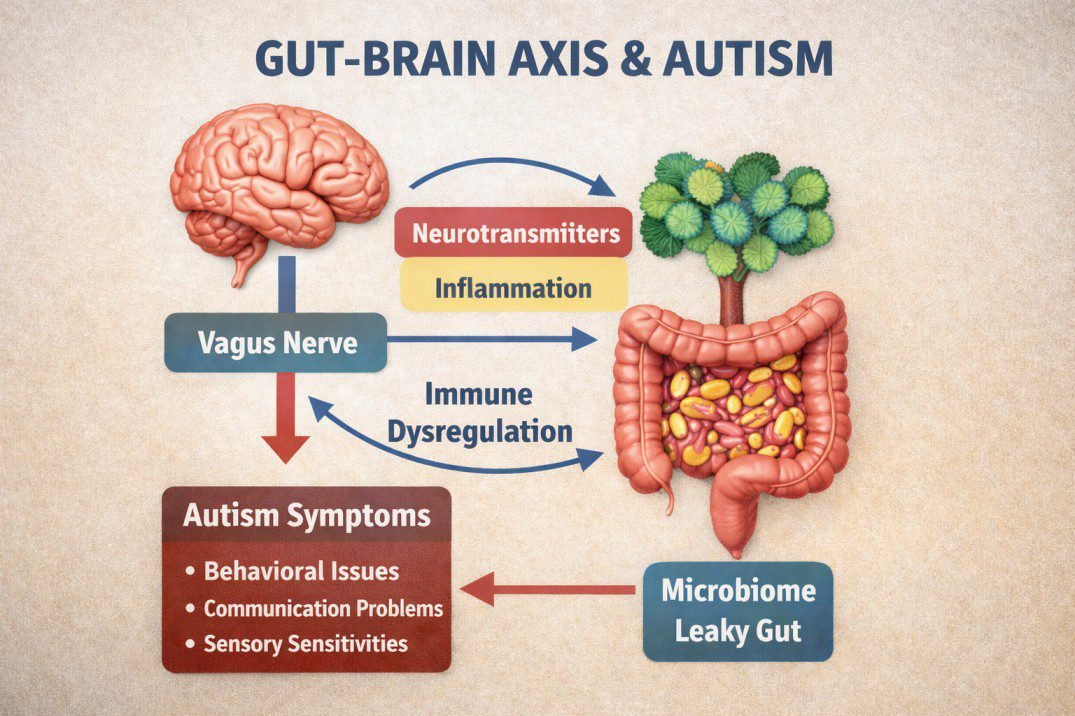
There has been a documented significant role of the gut-brain axis in autism-related disorders. Many children with ASD report gastrointestinal issues such as abdominal pain, constipation, diarrhoea, and food-related behaviours. Research consistently shows the relationship between gut dysbiosis (imbalanced gut bacteria) and autism symptoms. Other factors, such as inflammation, oxidative stress, maternal infections, heavy metal toxicity, and poor microbiome health, can increase levels of inflammatory cytokines, which in turn influence brain function. The microbiota-gut-brain axis has developed as a promising therapeutic target for autism intervention.
Role of Methylation Pathways in Autism
Methylation plays a central role in detoxifying environmental toxins and regulating gene expression. Many children with autism have impaired methylation pathways, which can be identified through clinical nutrigenomic testing. Key nutrients for healthy methylation include vitamin B6, B12, zinc, magnesium, L-methylfolate, and TMG (trimethylglycine).Comprehensive Functional Medicine Treatment Protocolfor Autism
Functional medicine delivers a systematic approach to tackling the underlying causes of autism. Here’s a thorough breakdown
of scientific research-based interventions:
-
Reducing Systemic Inflammation for autistic symptoms.
-
Healing Leaky Gut with a Functional Medicine approach
-
Supporting Detoxification Pathways
-
Optimising Mitochondrial Function
-
Managing Nutritional Deficiencies
-
Restoring the Microbiome
Getting Started with Functional Medicine for Your Child
Here is a step-by-step guide: Comprehensive Testing: It includes nutritional status, gut health markers (comprehensive stool analysis), genetic testing, food sensitivities, organic acids testing, and environmental toxic exposure assessment. Personalised Treatment Plan: An individualised protocol to address your child’s specific imbalances and needs, based on test results and clinical investigations, will be created. Patience and Consistency: Functional medicine approaches take time. Most families see gradual improvements over 6-12 months of consistent intervention, though some changes may be noticed within weeks. Collaborative Care: It is imperative that you work with your child’s existing therapy team to provide integrated support. A consistent communication between you and therapy providers will ensure coordinated, comprehensive care.A ray of hope and positivity for Your Family
Functional medicine offers hope via comprehensive, personalised interventions that essentially address root causes.
Many families report considerable improvements in their child’s symptoms, quality of life, and developmental progress through this all-encompassing autism treatment approach.
Every child with autism is unique, and what works for one may differ for another.
Functional medicine honours this individuality by creating personalised clinical nutrition treatment protocols that aim to reduce inflammation and restore cellular or mitochondrial health.